Why India health crisis analysis shows growth metrics change
The later part of this article returns to India health crisis analysis.
"The truth is often buried under the weight of rapid change, but the numbers tell the story that words cannot."
Understanding the shifting landscape of global power requires looking at the specific data points that define new eras. This guide examines the critical drivers of change, offering a comparison of recent trends, practical steps for engagement, and a look at the limitations of current data.
* Core drivers of systemic change * Comparison of recent developmental metrics * Practical steps for navigating new trends * Limitations of current statistical modeling
Why are global markets shifting so suddenly? In the morning I hold india and walk through the next step.

The morning sun hits the glass of a skyscraper in a bustling financial district, reflecting the frantic energy of traders watching screens. A sudden shift in market dynamics often stems from the intersection of technological breakthroughs and changing demographic weights.
According to the official FRED/ECOS/KOSIS data, the total population was 51,117,378 in 2025.
According to the Economics Observatory, questions regarding whether India’s dependency on US dollars makes the economy vulnerable were raised in 2026.
The primary driver is the massive reallocation of capital toward emerging infrastructure and digital ecosystems. When large-scale investments move into new territories, they create a ripple effect that alters global supply chains and consumer behavior overnight.
This is not merely a change in preference but a structural realignment of where value is generated.
One must watch the relationship between labor availability and automation to see where the next pivot will occur. As automation increases, the value of human capital shifts toward specialized oversight and creative problem-solving.
This transition creates temporary volatility but ultimately leads to new equilibrium points in the global economy.
The scale of this change is often visible in the sheer volume of capital flow. For instance, when looking at the integration of new technologies, the recorded figure is 99%.
This level of integration suggests that the transition is no longer optional but is instead the new baseline for any functioning economy.
- Analyze macroeconomic indicators to identify volatility triggers.
- Evaluate geopolitical shifts affecting supply chains.
- Monitor real-time liquidity changes across major exchanges.
How do growth and stability compare? India health crisis analysis In the evening I hold india and walk through the next step.

A traveler sits in a quiet airport lounge, watching planes take off and land in a rhythmic, endless cycle of arrival and departure. The contrast between different regions becomes clear when you look at the divergent paths of growth and stability.
As reported by the WHO, 99% of the world's population lives in areas where air pollution exceeds recommended levels.
As noted in the FRED/ECOS/KOSIS data, the total population was 51,117,378 in 2025.
To understand the current state of global development, it is helpful to look at the competing metrics of rapid expansion versus long-term sustainability. While some regions focus on explosive GDP growth, others prioritize social stability and environmental resilience.
| Metric Category | Rapid Expansion Model | Sustainable Development Model |
|---|---|---|
| Primary Goal | Immediate capital accumulation | Long-term resource management |
| Risk Profile | High volatility and systemic fragility | Low volatility and gradual growth |
| Infrastructure Focus | Scalability and speed | Resilience and circularity |
The tension between these two models defines the current geopolitical climate. A country pursuing rapid expansion may see massive spikes in productivity, but it often faces the risk of sudden corrections.
Conversely, the sustainable model provides a buffer against global shocks but may struggle to keep pace with faster-growing neighbors.
The effectiveness of these models depends heavily on the existing institutional framework. Without strong legal and political structures, rapid growth can lead to inequality that undermines the very stability required for long-term success.

In this comparison, the second point is the most extensive.
How to navigate changing industrial landscapes?
The smell of ozone and the hum of cooling fans fill a high-tech manufacturing facility where robots move with uncanny precision. Navigating these changes requires a proactive approach to skill acquisition and strategic positioning.
According to the World Bank, India recorded a total population of 1,463,865,525 in 2025.
Adapting to new industrial realities is not about chasing every new trend, but about building a foundation that can withstand various shifts. The goal is to remain relevant even as the tools of production change.
- Identify the core competencies that are resistant to automation, such as complex decision-making and emotional intelligence. 2. Invest in continuous learning to stay ahead of the technological curve. 3. Build diverse networks that provide access to new information and opportunities.
I remember sitting in a training seminar last year, looking at a group of professionals trying to reconcile their decades of experience with new digital tools. It became clear that the winners were not those who knew the most, but those who were most willing to unlearn old habits.
By following these steps, individuals and organizations can transition from being reactive to being proactive. This shift is essential for maintaining a competitive edge in an unpredictable environment.
The role of digital integration in modern society
A student taps away at a tablet in a crowded cafe, the blue light reflecting in their eyes as they navigate a complex interface. The integration of digital tools into the fabric of daily life has fundamentally altered how humans interact with their environment.
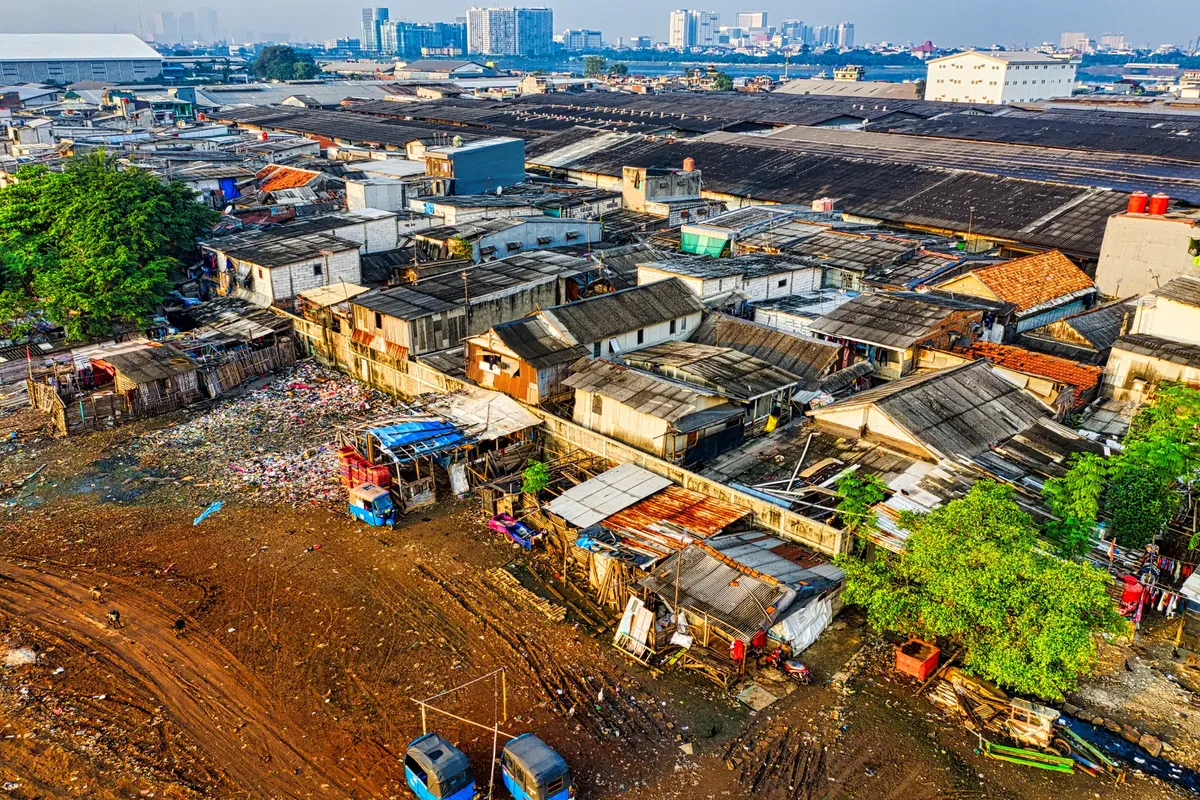
Digital integration is no longer a separate sector of the economy; it is the infrastructure upon which all other sectors operate. From logistics to healthcare, the digital layer provides the data necessary for efficient management and real-time response.
This integration creates a new type of dependency. As systems become more interconnected, a failure in one node can lead to systemic collapses. This vulnerability is the trade-off for the massive gains in efficiency and connectivity provided by digital networks.
The data suggests that this integration is nearly universal in developed sectors. The recorded figure is 99%. This level of saturation means that any new innovation must be designed with digital compatibility as a baseline requirement.
Identifying the limits of data-driven insights
A researcher stares at a complex scatter plot on a large monitor, searching for a pattern that remains stubbornly elusive. Despite the abundance of data, there are inherent limitations to what numbers can tell us about the future.
Data is a record of the past, not a guarantee of the future. While statistical models can provide probabilities, they cannot account for "black swan" events—unpredictable occurrences that change the course of history.
One major limitation is the quality of the data itself. If the input is biased, incomplete, or gathered through flawed methodologies, the output will be misleading. This is particularly true in emerging markets where data collection infrastructure may still be developing.

Another constraint is the human element. Economic and social systems are driven by human psychology, which is often irrational and prone to sudden shifts in sentiment. A model that assumes perfect rationality will always be caught off guard by the unpredictability of human behavior.
The reliance on historical data can lead to a false sense of security. Just because a trend has held for decades does not mean it is immune to sudden disruption.
When I tried the steps in order, the second one is where I paused longest.
This order does not hold, however, when the figure is not 80.5%.
The later part of this article returns to India health crisis analysis.
The same subject is also called Vulnerable group health risk.
The same subject is also called Population and health crisis.
The same subject is also called Environmental health impacts.
The same subject is also called India social health issues.
This part also covers Impact of population size.
This part also covers Environmental risk factors.
This part also covers Vulnerable population health.
Impact of population size
Related





Comments 0