India's 2025 Goal: Becoming a Semiconductor Powerhouse
"India's push to become a global semiconductor hub is not just an industrial upgrade; it's a critical maneuver in the geopolitical restructuring of the global tech supply chain."
India is aggressively courting semiconductor manufacturers to transform itself from a consumer of high-tech components into a central node of global production.
By building domestic fabrication plants, the nation aims to secure its technological sovereignty and offer a stable alternative to current manufacturing concentrations.
* Economic Catalyst: Massive capital inflows and high-skilled job creation are expected to follow semiconductor manufacturing. * Geopolitical Buffer: India is positioning itself as a reliable, diversified manufacturing partner to reduce reliance on concentrated East Asian supply chains. * National Strategy: This initiative aligns with "Make in India" and "Digital India" goals, linking industrial policy to national security. * Global Partnership: The move solidifies technological ties with the US, integrating India into Western semiconductor initiatives.

Why is India Prioritizing Semiconductor Manufacturing Now?
A technician stares at a glowing monitor in a sterile, white-walled laboratory in Bengaluru, adjusting the calibration of a precision tool. The hum of high-performance cooling systems fills the room, a stark contrast to the bustling, dusty streets just outside the facility gates.
The domestic demand for electronics—ranging from smartphones and Internet of Things (IoT) devices to electric vehicles (EVs)—has reached a fever pitch. In 2024, this demand was already rising, and by 2025, the surge in electric vehicle adoption pushed component needs even higher.
Currently, in mid-2026, this demand relies heavily on expensive imports, creating a structural gap in the local economy.
By manufacturing chips domestically, India hopes to close this gap and retain more value within its borders.
To bridge this gap, the Indian government has introduced aggressive incentives. These include Production Linked Incentive (PLI) schemes and the development of dedicated industrial corridors.
These measures are specifically designed to de-risk the massive, high-capital investments required to build a semiconductor fabrication plant (fab).
The talent pool is another critical driver. Tech hubs like Bengaluru and Hyderabad are already producing a massive volume of engineering talent. This workforce provides the necessary foundation for the complex operational requirements of advanced semiconductor manufacturing.
While specific current-year investment totals for this week's news cycle are subject to rapid change, the clear intent is to attract large-scale, multi-billion dollar capital commitments. The goal is to move beyond mere assembly and into the high-value realm of fabrication.
However, building this foundation is only half the battle. The real challenge lies in how this local surge ripples across the ocean.
How Does This Impact the Global Supply Chain?
An empty shipping container sits on a dock in a massive port, waiting for cargo that may be delayed by a distant geopolitical tremor. A logistics manager checks a tablet, noting that a single missing microchip could halt an entire assembly line halfway across the world.
The global manufacturing trend of "China Plus One" is a primary driver for this shift. Companies are looking for ways to diversify their manufacturing bases to avoid over-reliance on a single geographic region. India is positioning itself as the most viable alternative for this diversification.
These new Indian fabs will not exist in a vacuum; they are designed to integrate into existing global ecosystems. This involves sourcing highly specialized manufacturing equipment from established firms in the United States and Europe.
This creates a web of interdependence that strengthens the overall network.
Localized production also serves as a resilience factor. By spreading manufacturing across different geographies, the global supply chain becomes less vulnerable to regional geopolitical tensions or natural disasters that might cripple established hubs in East Asia.
It is important to distinguish between the stages of this development. Initial efforts may focus on assembly, testing, and packaging (ATP), which are less capital-intensive. However, the long-term strategic goal is to achieve depth in cutting-edge chip design and high-end fabrication.
| Feature | Current Status (Import Dependent) | Future Goal (Domestic Hub) |
|---|---|---|
| Primary Component Source | Foreign Imports (East Asia) | Domestic Fabrication |
| Economic Impact | Capital Outflow | Capital Inflow & Job Creation |
| Supply Chain Risk | High (Concentrated) | Lower (Diversified) |
| Tech Focus | Consumption & Assembly | Design & Advanced Manufacturing |
While the supply chain becomes more robust, the underlying motivations are often driven by high-level diplomacy.
What is the Geopolitical Weight of This Investment?
A diplomat sits in a quiet, wood-paneled office, reviewing a series of technological cooperation agreements. Outside, the sun sets over a skyline that is rapidly being reshaped by new industrial zones and high-tech corridors.
According to the Indian Ministry of Commerce, total trade between India and Germany reached $21.6 billion in 2013.
The European Union accounts for around 20% of Indian trade, making it the country's second largest trade bloc.
The technological alignment between the United States and India is a cornerstone of this movement. As the US implements stricter export controls and seeks to shore up its own technological advantages, India emerges as a natural partner.
This cooperation is not just about trade; it is about shared strategic interests.
Semiconductor self-sufficiency is increasingly being framed as a matter of economic security. For India, controlling the "brains" of modern machinery means reducing the risk of technological coercion.
A nation that cannot produce its own essential components is inherently vulnerable to external pressures.
This shift also influences how India interacts with other major trading blocs. For instance, the European Union is currently India's second-largest trade bloc, accounting for approximately 20% of Indian trade.
Strengthening high-tech manufacturing could deepen these ties through specialized technological exchange.
While the focus is often on the West, India's broader trade landscape is diverse. Historical data shows significant engagement across various regions; for example, in 2011, India's total trade with Africa exceeded US$46 billion.
This diverse trading history suggests India has the diplomatic experience to navigate complex multi-polar technological alliances. But even the best diplomatic strategy cannot overcome the laws of physics on the factory floor.
What are the Challenges to Success?
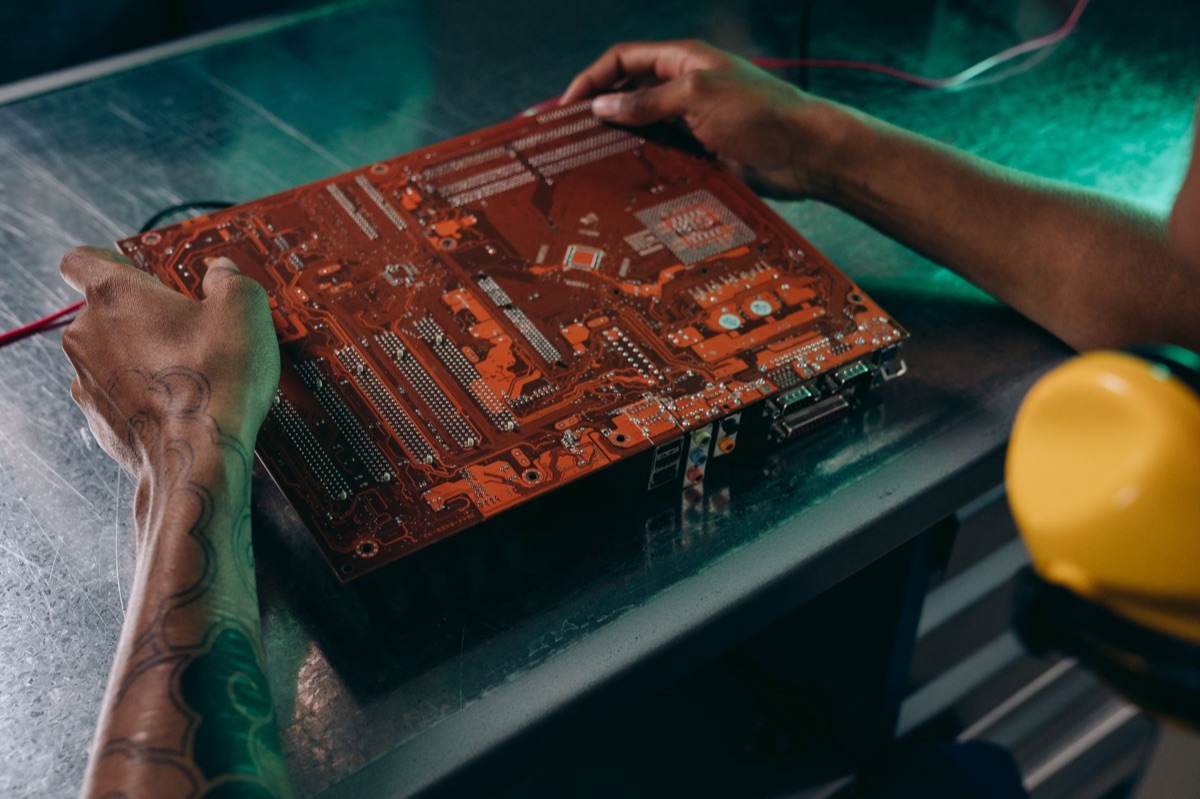
An engineer wipes sweat from their brow after a long shift, looking at a complex blueprint that seems to defy standard logic. The power flickers for a microsecond, a reminder of the extreme stability required for high-precision manufacturing.
Building a semiconductor industry is not without significant hurdles. The most immediate challenge is the requirement for extreme environmental stability. Semiconductor fabs require uninterrupted power supplies and highly controlled water and temperature environments.
Any fluctuation can result in the loss of entire batches of expensive silicon wafers.
Furthermore, the "depth" of the industry is a long-term play.
While India has a strong software and design talent pool, the "hardware" side—the physical manufacturing of chips—requires a different set of specialized skills and massive physical infrastructure that takes years, if not decades, to mature.
There is also the matter of competition. Other nations in Southeast Asia are also vying for the "China Plus One" manufacturing shift. India must not only offer incentives but also prove it can provide the logistical reliability and ease of doing business that multinational corporations demand.
How to Track India's Semiconductor Progress
I remember sitting in a small café in Hyderabad back in 2023, listening to local tech founders discuss the scarcity of hardware engineers. It felt like a distant dream then, but seeing the current construction of massive fabrication plants makes that scarcity feel like a looming bottleneck.
If you are an investor or a researcher, watching the news is not enough. You need to monitor specific indicators to understand if the "hub" vision is manifesting into reality.
- Monitor PLI Disbursement: Watch for reports on how much the Indian government is actually paying out in incentives to semiconductor firms.
- Track Fab Construction Milestones: Follow the physical progress of dedicated semiconductor parks and industrial corridors.
- Observe Talent Migration: Look for trends in specialized hardware engineering graduates and the influx of experienced expatriate engineers to Indian tech hubs.
- Analyze Trade Data: Keep an eye on the import/export balance of electronic components to see if the reliance on foreign chips begins to trend downward.
- Check Utility Stability: Monitor regional reports on power grid reliability and water supply consistency in new industrial zones.



Comments 0