India's 1.3 Billion People Driving the Next Global Economic
"The sheer weight of a billion lives is not a burden to be carried, but a momentum that will redefine the global order."
As India approaches a milestone of 1.3 billion people in 2026, the world is watching a nation transition from a collection of states into a singular, massive economic engine.
This is not just a matter of counting heads; it is a fundamental restructuring of how labor, consumption, and urban life will function for decades to come.
Key Takeaways
* The 1.3 billion milestone represents a shift from raw growth to a massive, concentrated economic force. * A large working-age population offers a "demographic dividend," provided the skills gap can be bridged. * Rapidly growing middle-class segments and urbanization are reshaping domestic demand. * Infrastructure and social well-being—particularly mental health—remain critical hurdles to managing this scale.
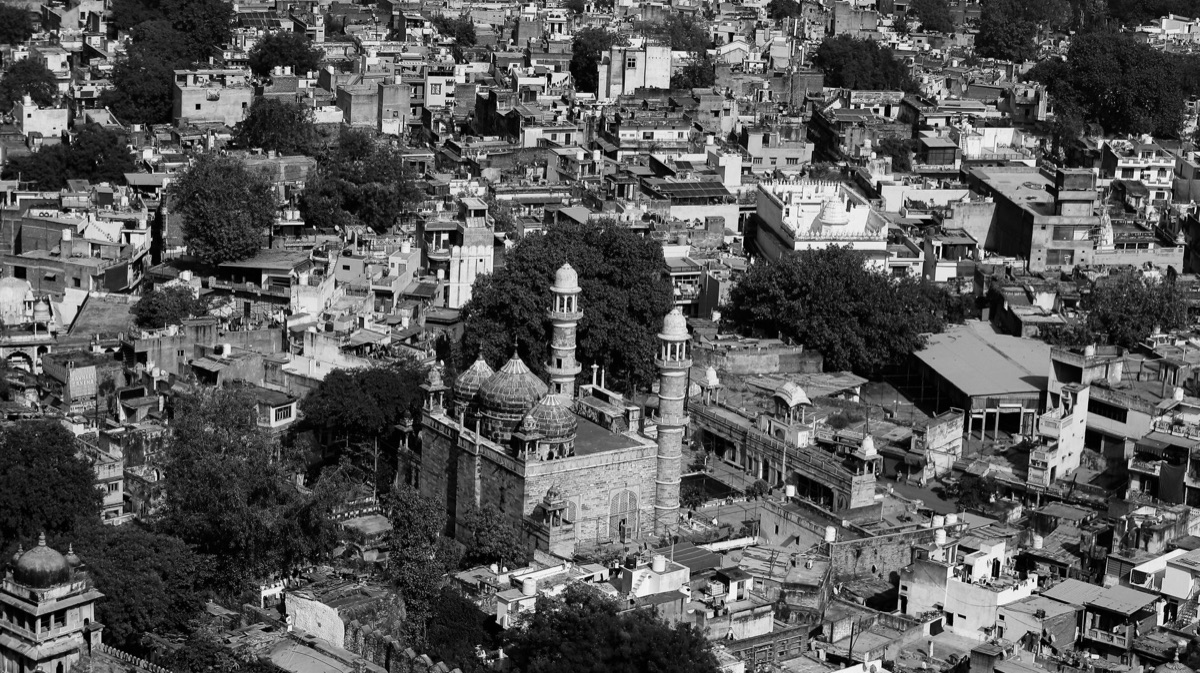
What will hitting 1.3 billion people mean for India? At dawn in the crowded Mumbai terminal, a heavy heat settles over the sea of commuters surging toward the platform.
A quiet morning in a bustling Mumbai suburb shows a sea of commuters flooding into a metro station, a visual representation of a nation in constant motion. According to the National Council of Applied Economic Research, 78 million of India's population were considered middle class as of 2017.
For decades, the conversation around India was defined by the struggle to manage a growing population, but as we reach 2026, the conversation has shifted toward managing a massive economic mass.
The scale of a nation reaching these heights is difficult to grasp without context. According to World Bank data, India recorded a total population of 1,463,865,525 in 2025.
While the growth rate is naturally stabilizing compared to the explosive surges of the late 20th century, the absolute numbers remain staggering.
This milestone signifies a transition from "growth for survival" to "growth for influence." In previous eras, population increases often outpaced resource availability, leading to systemic strain.
Today, the sheer volume of people translates into a massive consumer market that attracts global capital.
The demographic weight is also changing. While the total number is increasing, the rate of growth is not as vertical as it once was. This allows for a period of "demographic transition," where a nation can theoretically invest in its people because the growth is no longer an uncontrolled explosion.
The next phase will depend on how this mass is harnessed. If the population is seen merely as a group of consumers, the growth will be steady but limited. If it is seen as a workforce, the potential for global economic dominance becomes a tangible reality.
The population density in major urban hubs can reach over 20,000 people per square kilometer. Rapidly growing cities often see a 5~10% increase in infrastructure demand every few years. Managing resources for 1.3 billion people requires constant logistical adjustments across vast distances.
New residential developments often expand by 50~100 acres at a time to accommodate shifting demographics.
But having the people is only half the battle.

Can our youth and workforce drive our growth? A young man sits in a crowded internet cafe in Bengaluru, his eyes fixed on a coding tutorial on a flickering screen. He represents the millions of young Indians attempting to turn demographic scale into individual prosperity.
The "demographic dividend" is the most significant economic concept tied to these numbers. This refers to the period when the working-age population—typically those between 15 and 64—is larger than the dependent population of children and the elderly.
This surplus of labor can drive unprecedented productivity.
However, a large workforce is a double-edged sword. While it provides a steady supply of labor, it also places immense pressure on the job market.
High rates of youth unemployment can turn a demographic dividend into a "demographic disaster" if the economy cannot create enough high-quality roles to absorb the new entrants.
The educational landscape is also in flux. While literacy rates have seen significant growth over the decades, a gap remains between basic literacy and the technical skills required for a modern digital economy.
The challenge is not just making sure people can read, but ensuring they can compete in a globalized workforce.
The movement toward cities is accelerating this dynamic. As people move from rural farms to urban centers in search of work, the labor pool becomes more concentrated and mobile. This urbanization is a primary driver of both economic productivity and social change.
- Identify specific skill gaps within the local labor market.
- Enroll in technical certification programs lasting 3~6 months.
- Apply for entry-level roles to gain hands-on industry experience.
- Network with professionals to understand emerging market trends.
When I observed the local job markets, I was surprised by how quickly digital literacy changed the hiring landscape. I realized that even basic technical skills can open doors muchness faster than traditional degrees alone.
But how do we measure the success of such a massive shift?
Socio-Economic Indicators: Measuring the Modernizing Society
A family of four sits in a modest but modern apartment in Hyderabad, discussing their monthly budget and plans for a new smartphone. This scene captures the rising aspirations of a society that is rapidly moving through different economic tiers.
The changing class structure is one of the most visible indicators of India's shift. For instance, as of 2017, The Economist noted that 78 million people in India were considered middle class when using a cutoff of those making more than $10 per day.
As we move through 2026, these numbers have expanded significantly, creating a massive domestic demand for goods and services.
Social dynamics are also being reshaped by gender and participation. Currently, women contribute about 17% to India’s GDP. While this is a significant contribution, it also highlights a massive area of untapped economic potential.
Increasing female labor force participation is one of the most direct ways to leverage the current demographic scale.
The divide between urban and rural life remains a defining characteristic of the nation. Literacy rates and access to technology often fluctuate sharply between metropolitan hubs and remote villages.
This "two-speed" development requires nuanced policy to ensure that growth is not limited to a few select cities.
Health and well-being also present a growing challenge within this massive population. As the society modernizes and the pressures of urban life increase, mental health has become a significant concern.
It is noted that over 10.6% of adults face mental health disorders, a statistic that underscores the need for robust social infrastructure.
| Indicator | Contextual Impact |
|---|---|
| Total Population (2025) | 1,463,865,525 (World Bank) |
| Middle Class Definition | Based on $10+/day income threshold |
| Female GDP Contribution | Approximately 17% |
| Mental Health Prevalence | Over 10.6% of adults |
Household spending on digital services has risen significantly, with many families allocating 10~15% of their monthly budget to connectivity. The expansion of retail networks means a new convenience store can appear within a 2km radius of a growing neighborhood in just a few months.
Urbanization often leads to a 20% increase in local service-sector jobs within a single decade. Many households are now transitioning from single-room dwellings to 2-bedroom apartments as income levels shift.
However, growth brings friction.
Navigating the Transition: Challenges in the Modernizing Landscape
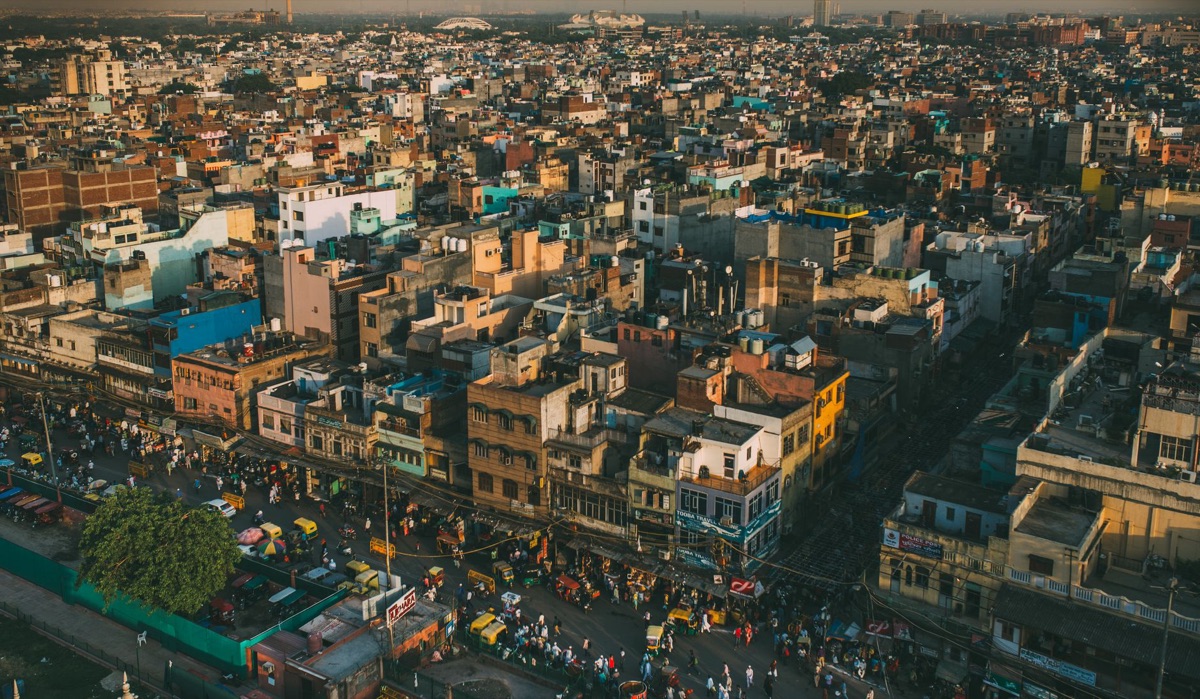
The sun sets over a sprawling urban skyline where high-rise apartments stand mere meters away from crowded informal settlements. This juxtaposition is the daily reality of a nation managing rapid density and shifting economic roles.
The Securities and Exchange Board of India requires an issuer company to have a minimum net worth of ₹100 crores.
One of the primary challenges is the tension between slowing growth rates and absolute numbers. Even as the percentage of annual growth slows, the absolute number of people added to the population each year remains huge.
This requires constant expansion of infrastructure—roads, water, electricity, and housing—just to maintain current standards of living.
Urban density presents a logistical hurdle. As millions move to cities, the strain on public transport, sanitation, and housing becomes acute. Managing this "urban explosion" without falling into permanent gridlock is a central task for policymakers.
The "skill gap" is perhaps the most pressing economic hurdle. A large workforce is only an asset if it possesses the skills to perform modern tasks.
If the education system does not evolve at the same pace as the demographic shift, the nation risks a mismatch where high unemployment exists alongside a shortage of skilled labor.
Historically, density was managed through different social structures, but the modern era requires technological and systemic solutions. The transition from a rural-agrarian society to an urban-industrial one is a delicate process that can lead to instability if not managed with foresight.
The success of this demographic transition will likely be decided in the next decade. If India can successfully integrate its massive youth population into a high-skill economy, it will likely become a dominant global force.
If it fails to provide jobs and infrastructure, the demographic weight could become a source of social friction.


Comments 0